
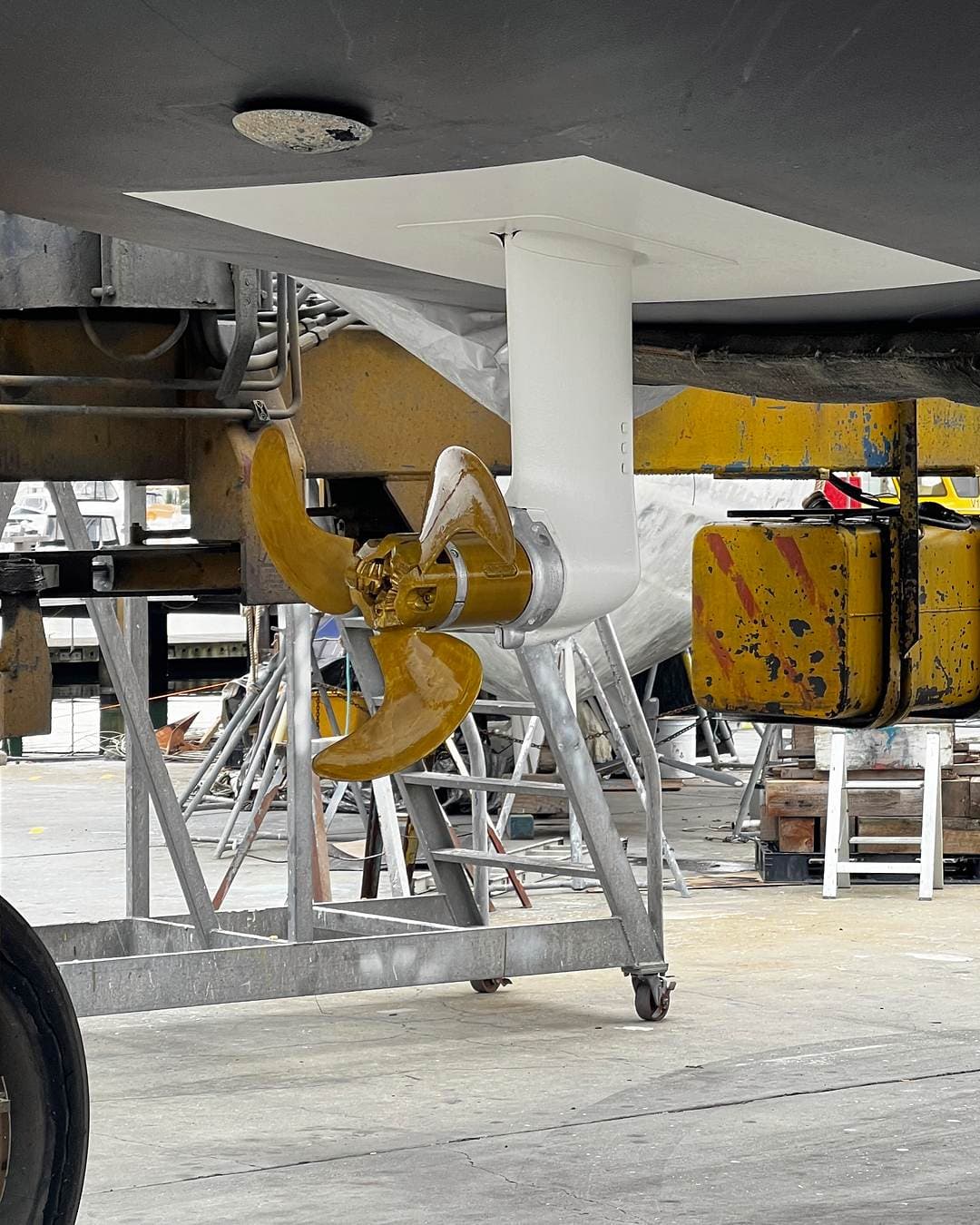
Volvo Penta saildrive · Authorised dealer · Melbourne
Volvo Penta saildrive service, planned around your haul-out.
Leg oil, anodes, propeller and the rubber seal, on the 130S, 150S and older legs. Serviced to Volvo Penta’s schedule by an authorised dealer, with a clear rundown of what’s urgent and what can wait.
- Authorised Volvo Penta dealer
- Servicing Melbourne boats since 1995
- Genuine seals, anodes and oil
- On the hardstand or at your berth
Your setup
Which saildrive leg do you have?
Volvo Penta has built saildrives since 1973, and the leg behind your engine depends on its age and size. Pick yours to see what we look after.
The 130S sits behind every saildrive D1 and the smaller D2s (D2-40, D2-50 and D2-55). You’ll see a 130S-B or the later 130S-C, which holds more oil, and a 130SR where the engine is installed back to front.
- Leg oil change, checked for water
- Drive anode and the propeller anodes
- Folding propeller cleaned and greased
- Rubber seal inspection
- Rubber seal replacement every seven years
- Seawater intake and seacock check
- Paint and corrosion check on the leg
- Engine service in the same visit
What you get
You’ll know exactly where your saildrive stands.
Every service ends with a plain-English rundown. Each item is marked done, keep an eye on, or needs attention, so you can see what’s urgent and what can wait. Anything beyond the service is quoted first.
- A record for the leg, kept with the engine’s
- The rubber seal date recorded, so you know when it’s next due
- What’s due next, so you can plan your next haul-out
Servicing and your Volvo Penta warranty
Volvo Penta’s leisure warranty expects your engine and drive to be maintained to the operator’s manual, with records kept, and excludes faults caused by non-genuine parts or by repair work done outside Volvo Penta’s authorised network. On older engines, Volvo Penta’s Extended Protection for leisure boats also required the scheduled services to be done by an authorised dealer or workshop. Your warranty documents set out the terms for your engine. We service to the schedule with genuine parts and record every visit. Your rights under the Australian Consumer Law apply in addition to these terms.
Service rundown
130S saildrive · D2-40 · On the hardstand
- Done
Leg oil
Drained and refilled. No sign of water.
- Done
Drive anode
About half gone. Renewed.
- Done
Propeller anodes
All three renewed.
- Done
Folding propeller
Cleaned, greased and refitted. Folds freely.
- Done
Seawater intake
Clear.
- Keep an eye on
Leg paintwork
Paint lifting near the anode. Touched up. Check at the next haul-out.
- Needs attention
Rubber seal
Fitted nine years ago, past Volvo Penta’s seven-year interval. Quoted to replace before relaunch.
Something not right?
Signs your saildrive wants attention.
Many problems give a warning first. If you’ve noticed one of these, it’s worth a look before it turns into a lost weekend.
Grey or milky leg oil
Volvo Penta’s manual says grey oil means water has got into the drive. Get it looked at before the gears suffer.
Cracks or wear on the rubber seal
The seal is what keeps the sea out where the leg passes through the hull. Volvo Penta says to change it at seven years, or sooner if it’s damaged.
Anodes disappearing fast
Volvo Penta warns that a faulty electrical installation can leave the leg unprotected, and that the corrosion damage that follows is quick and often extensive. Wrong or badly applied paint can also stop the protection working, and the anodes themselves must never be painted.
A coolant temperature alarm
The engine’s seawater comes in through the leg. Volvo Penta’s list of causes includes a blocked seawater intake or filter, a failed impeller and low coolant.
Vibration under power
Volvo Penta’s list points to a damaged or wrong propeller, or to the engine mountings. A folding propeller also needs cleaning and greasing every year so it folds easily.
Slower under power than it used to be
Fouling on the hull, leg or propeller is high on Volvo Penta’s list when the engine won’t reach full rpm. Its laying-up routine has the hull and drive cleaned as soon as the boat comes out.
Timing
Book around the boating season.
A little planning means the boat is ready on the first good sailing weekend, not the third.
78%
of maritime incidents reported in Victoria in 2024–25 were vessel breakdowns, most of them engine failure or running out of fuel.
Source: Safe Transport VictoriaAugust to October
Pre-season service
Book before the rush. November to Easter is our busiest period, so a service in late winter or early spring has the boat ready for the first good weekend.
Book a pre-season serviceNovember to Easter
On the water
Peak sailing, and our busiest months. If an alarm won’t clear or something doesn’t feel right mid-season, call us.
Easter to July
Bigger jobs
The best time for haul-outs, rubber seals, anodes and propeller work, with the least sailing missed.
Who you're dealing with
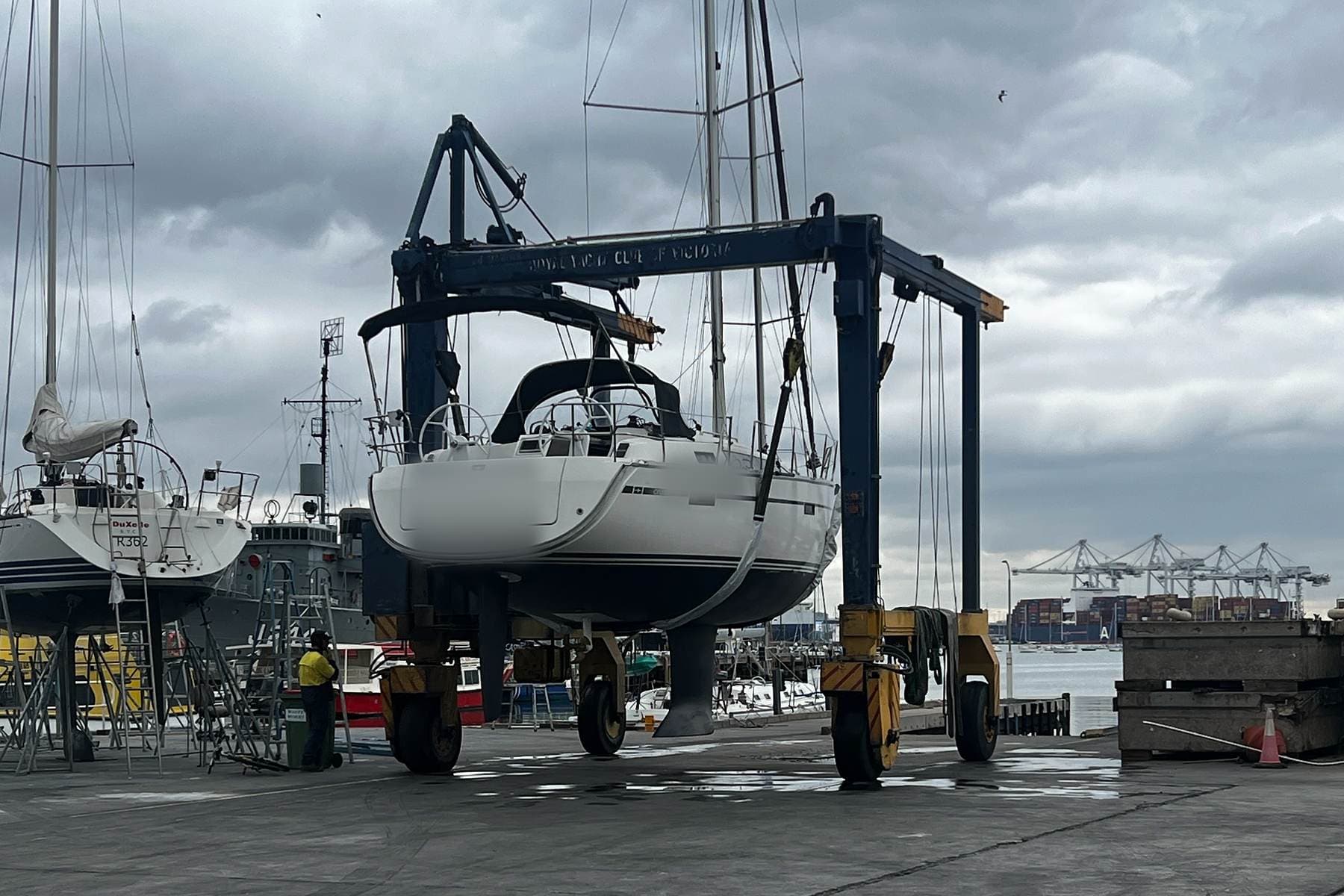
An authorised Volvo Penta dealer, looking after Melbourne boats since 1995.
Our technicians bring Volvo Penta’s service procedures, specifications and special tools, and genuine seals, anodes and oil, to your boat on the hardstand or at the berth. Bigger jobs come back to our Spotswood workshop.
- Authorised Volvo Penta dealer
- Factory-trained technicians
- Genuine Volvo Penta parts on the shelf
- Also authorised for Yanmar and Twin Disc, and a ZF Marine Service Point
Every Volvo Penta saildrive, old and new
The leg has its own plate, separate from the engine’s. Send us its designation when you book (130S-B or 130S-C, for example), since oil quantities and parts differ between versions.
Volvo Penta saildrives are fitted to boats like the Bavaria Cruisers, Hanse 355 and 505, Dehler 41 and 44, Beneteau First 44.7, Dufour Grand Large 460 and J/99. Many 1990s and early-2000s yachts, like the Bavaria 34, 37 and 42 of that era, run a 120S leg behind an MD-series engine.
Questions
What saildrive owners ask us
How much does a saildrive service cost?
It depends on the leg, what’s due on Volvo Penta’s schedule, and whether the rubber seal is due. We confirm all of that and give you a clear quote before any work starts.
Does the boat need to come out of the water?
For most of it. The leg oil can be pumped out from inside the boat, so it can be changed afloat mid-season. The anodes, propeller and rubber seal need the boat out of the water, so we plan those with your haul-out.
How often does the rubber seal need replacing?
Volvo Penta’s manuals say the rubber seal between the drive and the hull must be changed every seven years, or earlier if it’s damaged, and that the work should be done by an authorised workshop. That rule runs from the MD2000-series manuals through to the current D1 and D2 manual. If you don’t know when yours was last done, it’s worth finding out.
How often does the leg oil need changing?
On D1 and D2 saildrives, Volvo Penta’s schedule has the leg oil changed every 200 hours or 12 months, whichever comes first, with the level checked every 14 days. The right oil and quantity depend on the leg version, and Volvo Penta has updated the oil spec over the years, so we go by your leg’s plate and the current spec.
Will servicing with you keep my Volvo Penta warranty valid?
Volvo Penta’s leisure warranty expects maintenance to your operator’s manual with records kept, and excludes damage from non-genuine parts or repairs outside its authorised network. As an authorised Volvo Penta dealer we service to the schedule with genuine parts and record every visit.
Which saildrive do I have?
The leg has its own plate, separate from the engine’s. D1s and the D2-40, D2-50 and D2-55 normally run a 130S, the D2-60 and D2-75 a 150S, and older MD-series engines a 120S or MS25S. An SR on the end (130SR, for example) means the engine is installed back to front. Send us the leg’s designation and we’ll know exactly what you have.
How do I book?
Use the booking form at the top of this page or call (03) 9399 5888. We aim to reply within 1 business day.
Ready for your next haul-out.
Tell us about your saildrive and where the boat is, and we’ll plan the work around your lift.